About Johann Peter

How Fast Can Firms Grow?

Abstract: Building on recent research on dynamic, high-growth firms—so-called “gazelles”—this paper explores a simple question that is important in both theoretical and practical terms: What is the fastest rate at which firms can grow? Based on a sample of seven high-growth firms (Cisco, GM, IBM, Microsoft, Sears, Starbucks, and US Steel), we find that 162% is the maximum sales growth rate in any one year that an established company can grow without mergers and acquisitions, while the maximum rate of employee growth is approximately 115% even including some mergers and acquisitions. All of the companies in our sample attained a maximum sales growth rate of above 50%, with most hovering around 75%. Furthermore, the firms’ growth rates exhibit similar patterns. No company experienced its maximum sales growth rate toward the latter part of its history. Every company experienced its slowest employee growth rate after attaining its maximum employee growth rate, usually within a decade of one another. Most importantly, all firms show an average sales growth that exceeds the average employee growth. This finding is an indication that successful growing firms have a superior capability to continuously improve employment efficiency and adjust organizational structures to suit an increasing workforce.

Murmann, J. P., Korn, J., & Worch, H. 2014. How Fast Can Firms Grow? Journal of Economics and Statistics (Jahrbuecher fuer Nationaloekonomie und Statistik), 234(2-3): 210-233.  Download Article

The Rapid Decline of Printed Guidebooks

The digital revolution is devouring printed travel guides. Lonely planet is a case in point.  The BBC bought the company forf $210 in 2007 and sold it last year for roughly $121 million. Here is a instructive figure charting the decline in printed guide sales.


Lonely Planet and the rapid decline of the printed guidebook

CEO of Large German Publisher speaks out: Why we fear Google

This if one of the most interesting open letter I have ever read by a CEO. Mathias Döpfner, CEO of Axel Springer, closes his open letter:

Dear Eric Schmidt, you do not need my advice, and of course I am writing here from the perspective of those concerned. As a profiteer from Google’s traffic. As a profiteer from Google’s automated marketing of advertising. And as a potential victim of Google’s data and market power. Nevertheless – less is sometimes more. And you can also win yourself to death.
Historically, monopolies have never survived in the long term. Either they have failed as a result of their complacency, which breeds its own success, or they have been weakened by competition – both unlikely scenarios in Google’s case. Or they have been restricted by political initiatives. IBM and Microsoft are the most recent examples.

Read full letter in FAZ: Why we fear Google

What Employers value the most in MBA graduates

A recent survey of CEOs reveals what they are looking for in today’s MBA graduates:

Self-Awareness (62%)
Integrity (60%)
Cross-Cultural Competency (57%)
Team Skills (49%)
Critical Thinking (48%)
Communication (48%)
Comfort with Ambiguity and Uncertainty (41%)
Creativity (27%)
Execution (21%)
Sales (19%)


Source:  PoetsandQuants.com

Another Great Example of Serendipity in Scientific Discovery

People underestimate that scientists often make progress by chance.  Here is the story of researchers studying a species that has invaded Florida’s Everglades made an unanticipated discovery: deadly Florida pythons have internal GPS.

“We found that Burmese pythons have navigational map and compass senses,” said Shannon Pitman of North Carolina’s Davidson College, the lead researcher of a team of scientists that released six captured snakes back into the wild, then tracked them through the Everglades National Park for up to nine months.

“It wasn’t what we expected. We thought we’d see a kind of aimless, wandering behaviour, but the pythons made their way pretty quickly back to where to where they were captured. It was more sophisticated in terms of movement than we’ve seen in other species of snake.”

What makes the discovery more remarkable is that it was completely accidental. Pitman’s team originally wanted to release the snakes closer to their capture points within the Everglades, as they were more interested in studying the habitat through which they were moving than the actual distances they travelled.

But wildlife officials, whose efforts to eradicate or contain the up to 100,000 non-native snakes estimated to have spread through the park’s 1.5m acres, refused permission.

That led to the team releasing the snakes at more remote locations between 13 and 23 miles away, outside the National Park’s boundaries, and then watching in amazement as one python after another made its way back “home”.

Each snake was fitted with a radio tracker and its position monitored by GPS one to three times per week. All six moved in a near-straight line towards their capture points and five ended up within a couple of miles. The snake with the longest journey took nine months to reach its destination.


Full Story: Guardian

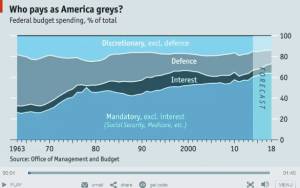
Superb Video Illustration of Changes to USA Budget in the past 50 Years

American Budget

Click on “More” to play the video animation.

More...

SAP Founder, Hasso Platter, on the difficulty of changing a firm rather than starting a new one

Hasso Platter co-founded SAP. For the past two decades he has been involved in trying to adopt the SAP to area of internet and cheap clout computing.

When asked whether it is harder to set up a new company or to steer an existing company in a new direction, he does not hesitate with his reply.

“The bigger challenge, I’d say, is the latter one.”

To reinvent a successful company such as SAP is much more difficult. “You have to convince people that change has to come, and that is difficult,” he says, noting that it is easier to convince Americans about the future than people in Switzerland or Germany. “We are more conservative. We are a little bit afraid of the future. Americans are not afraid of the future.”

Source:  Financial Times

John Borghetti calls on the government not to pick winners in the Australian airline industry

Borghetti Interview

The Three Rules: How Exceptional Companies Think

In their new book, The Three Rules: How Exceptional Companies Think, Michael E. Raynor and Mumtaz Ahmed carefully identified from all publicly listed American firms those firms that performed very highly over long periods of time. When they tried to find out what they had in common, they could not identify concrete behavior. What made the companies different, according to the authors, where their mindsets. This leads Raynor and Ahmed to articulate three rules for success.

  • Better before cheaper: Compete on differentiators other than price.

  • Revenue before cost: Drive superior profitability with higher prices or higher volumes, not lower cost.

  • There are no other rules: Change anything/everything in order to abide by the first two rules.

  • The Economist wrote a very thoughtful review about the entire genre of business books that tries to glean lessons from studying successful players.  I agree with their assessment that in the end,

    The difficult question is how to find that profitable niche and protect it. There, The Three Rules is less useful.

    Microsoft’s New CEO Nadella on how to organize for innovation

    In a wide-ranging interview with the NY Times, Nadella explained his views on how to organize for innovation.

    Q. Your company has acknowledged that it needs to create much more of a unified “one Microsoft” culture. How are you going to do that?

    A. One thing we’ve talked a lot about, even in the first leadership meeting, was, what’s the purpose of our leadership team? The framework we came up with is the notion that our purpose is to bring clarity, alignment and intensity. What is it that we want to get done? Are we aligned in order to be able to get it done? And are we pursuing that with intensity? That’s really the job.

    Culturally, I think we have operated as if we had the formula figured out, and it was all about optimizing, in its various constituent parts, the formula. Now it is about discovering the new formula. So the question is: How do we take the intellectual capital of 130,000 people and innovate where none of the category definitions of the past will matter? Any organizational structure you have today is irrelevant because no competition or innovation is going to respect those boundaries. Everything now is going to have to be much more compressed in terms of both cycle times and response times.

    So how do you create that self-organizing capability to drive innovation and be focused? And the high-tech business is perhaps one of the toughest ones, because something can be a real failure until it’s not. It’s just an absolute dud until it’s a hit. So you have to be able to sense those early indicators of success, and the leadership has to really lean in and not let things die on the vine. When you have a $70 billion business, something that’s $1 million can feel irrelevant. But that $1 million business might be the most relevant thing we are doing.

    To me, that is perhaps the big culture change — recognizing innovation and fostering its growth. It’s not going to come because of an org chart or the organizational boundaries. Most people have a very strong sense of organizational ownership, but I think what people have to own is an innovation agenda, and everything is shared in terms of the implementation.

    Source:  NY Times

    Previous Page   Next Page