About Johann Peter

Under Construction

The content management system powering this website is over 20-years old. The https version of it is not working properly. Take out “s” in the from https and with http: the website is still working. Bear with us us we are migration the website to a modern CMS.
Peter Murmann January 2026

Research Focus on Auto Industry

My research team is interested in studying how to improve strategic forecasting ability. As a key empirical context, we have selected the auto industry undergoing dramatic technological changes.
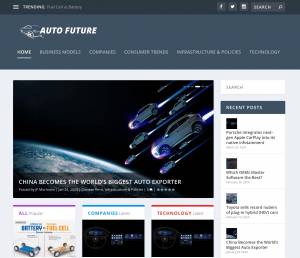
Auto future site

Click on the picture to access auto-future.org

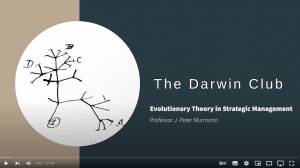
My presentation at Darwin Club: Evolutionary Theory in Strategic Management

Darwin Lecture

Click on picture to play video

New Competition in the auto industry: Incumbents versus startups

I have two new publications about the new competition in the auto industry.

A Capabilities Framework for Dynamic Competition: Assessing the Relative Chances of Incumbents, Start-Ups, and Diversifying Entrants (with Fabian Vogt in Management and Organization Review)

Exploring the structure of internal combustion engine and battery electric vehicles: implications for the architecture of the automotive industry (with Benedikt Schuler in Industrial and Corporate Change)

Forum on ‘The Rise of China’s Digital Economy’

In this forum, we present three essays that collectively seek to document and explain the rise of China’s digital economy. The first essay written by Hong Jiang – who is based in China – and myself – who is based in the West – focuses on documenting the rise of China’s digital economy by comparing it systematically with developments in the United States (Jiang & Murmann, 2022). This first essay intentionally says relatively little about the causes driving the rise so that the two invited teams of commentators could focus on reasons behind the growth of e-commerce and internet services in China. The first team, composed of Chong Ma, Ji-Ye Mao, and Xiao-Peng An (2022), is based in China and the second team, composed of Martin Kenney and Arie Y. Lewin (2022), is based in the United States. Both teams were provided with the opening essay and a set of questions to stimulate a debate about causes.

• Is the increasing strength of these digital sectors intimately tied to government policies? If so, how?
• Is the fact that China is much more lax about privacy a critical reason for the advances in China?
• Will China overtake the US in these digital services or will the fast growth slowdown?
• On the assumption that the geopolitical struggles between China and the US continue to rise, what, if any implications will this have for the further development of e-commerce and digital services companies in China and the US?
• The Chinese government recently has made it more difficult for Chinese firms to list on US stock exchanges; will this have a negative impact?

Download Forum

Adam Grant on the Four Deadly Sins of Culture

He says:

People often claim their cultures are unique. But when you study thousands of organizations, you can start to see underlying patterns.

It all has to do with how we balance key priorities. Research reveals that there are two fundamental tensions in organizational culture: Results vs. relationships and rules vs. risk. If you ignore one of these values altogether, you end up committing one of my 4 deadly sins of organizational culture: toxicity, mediocracy, bureaucracy, and anarchy.

The first sin of culture is Toxicity. It’s the deadliest sin of them all. New evidence on the Great Resignation shows that toxic culture is the biggest driver of turnover–more than burnout, more than low pay. Toxicity exists when a culture prioritizes results without relationships. Getting things done at the cost of treating people right. The organization tolerates disrespect, abuse, exclusion, unethical decisions, and selfish cutthroat actions. If people don’t get fired for those behaviors– or worse yet, still get promoted– Houston, we have a problem.

At the opposite end of the spectrum is a second sin: mediocracy. Valuing relationships above results. There’s no accountability. People are so worried about getting along that they end up forfeiting good work. In mediocracy, even if you do a terrible job, you can still get ahead as long as people like you. Before long you end up with the Peter Principle, where everyone is promoted to their level of incompetence, and they get stuck there.

The third sin is… Bureaucracy. That happens when a culture is all rules, no risks. New ideas are seen as threats to the status quo. People cling to process and resist creativity and change. They see questioning the way we’ve always done things as blasphemy! There’s red tape everywhere, and if you want to use the bathroom, you have to fill out paperwork.

And our fourth sin is Anarchy. You have risks but no rules. Anyone can do whatever they want, strategy and structure be damned. No one learns from the past or lands on the same page. It’s pure chaos. It’s bad enough when a culture commits one of these sins, but believe it or not, Maria’s jewelry company managed to be guilty of all four sins.

Source: Worklife Podcast

Heidelberg Cements sets serious environmental targets

Cement production is responsible for about 8% of CO2 emissions. For the world to become carbon neutral, big cement companies have to do the heavy lifting. Here is short video where the CEO lays out the ambitious goals the company has for 2030.

Guerrin feels mission and vision is not sufficient.

Purpose

To offer freedom of choice and movement for a better mobility experience.


Essence


A solution available at all times, for any distance and need.


Mission


Mobility is our reason for being.
Customer satisfaction is our motivation.


Vision


To be a leader in customer satisfaction and grow sustainably.

Source: https://www.guerin.pt/en/about-us/

Renault Faces only bad decision about its business in Russia

Purpose and the Employee

Economist reports on research on what motivates employees.

The story identifies six different archetypes, far too few to reflect the complexity of individuals but a lot better than a single lump of employees. “Pioneers” are the people on a mission to change the world; “artisans” are interested in mastering a specific skill; “operators” derive a sense of meaning from life outside work; “strivers” are more focused on pay and status; “givers” want to do work that directly improves the lives of others; and “explorers” seek out new experiences.
These archetypes are unevenly distributed across different industries and roles. Pioneers in particular are more likely to cluster in management roles. The Bain survey finds that 25% of American executives match this archetype, but only 9% of the overall us sample does so.

Click on the picture to play the full story.

Employee

Next Page