Blogs > Home
Presently there is no entry related to this category.

Presently there is no entry related to this category.

10 Management insights courtesy of Carol Tice
Carol Tice summarized the 10 lessons in recent management books.
1. Instead of hiring people with fancy resumes, hire people who fit your culture and are teachable.
2. Build a strong brand and don’t change it.
3. Focus all your products on the consumer by studying and listening to customers and innovating accordingly.
4. Appoint a DRI, or Directly Responsible Individual, for every task.
5. Create a confrontational workplace culture where workers feel free to challenge others’ opinions.
6. Have a system of secrecy that builds excitement and a sense of ownership—from launching projects in an outbuilding that flies a pirate flag to erecting walls around off-limits “lockdown rooms.”
7. Create a recognition culture. Novak was once horrified to find a 30-year company executive who only heard how great people thought his contributions were a few weeks before his retirement. Now, Yum! managers all over the world give out unique recognition awards, from miniature Taj Mahal statues to rubber chickens.
8. To lead people and achieve big goals, ask three questions: What’s the single biggest thing you can imagine that will grow your business or change your life? Who do you need to affect, influence or take with you to be successful? What prescriptions, habits or beliefs of this target audience do you need to build, change or reinforce to reach your goal?
9. When you build strong relationships with your management team before you launch, it makes it easier to execute on your vision.
10. Execution is more important than the idea.
Full Story on entrepreneur.com.
Categories: Entrepreneurship | Management |
Posted on Nov 09, 12

Different skills are crucial for managing corporations, non-for-profits and government organizations
People who have had very successful careers in corporations frequently underestimate how much they have to change their style to be effective in academic and other non-for-profit sectors. Here is a illumnating quote from Donna Shillalah who was quite effective in the government sector but found academia much more challenging.
“Everybody thinks university presidents are hierarchical and top-down,” said Donna E. Shalala, president of the University of Miami, and a former president of the University of Wisconsin and secretary of health and human services. “But we are not corporate chieftains, and we cannot rule from the sky. We are more like tugboat captains, trying to get our ships aligned and pulling them in the right direction.”
The great research universities, she said, have achieved their dominant position in the world through shared faculty governance, and leaving faculty both academic and research freedom.
“It was a lot easier to run a cabinet department than the University of Wisconsin,” Ms. Shalala said. “There are a lot of different constituencies at a university, and the president cannot be successful without buy-in from all of them.”
Souce: NY Times
Categories: Management |
Posted on Jun 25, 12

Lack of Replication in Management Studies
Tim Devinney and Donald Siegel write in their recent editorial of the Academy of Management Perspective (Feb 2012, Vol. 26 Issue 1, p 6-11):
Hubbard and Vetter (1996) estimated that fewer than 5% of management studies are subject to any published form of replication, and when this occurs it invariably refutes the initial research. (p.7)
Reference: Hubbard, R., & Vetter, D. E. (1996). An empirical comparison of published replication research in accounting, economics, finance, management, and marketing. Journal of Business Research, 35(2), 153–164.
Categories: Management | Methodology |
Posted on Jun 11, 12

Reflections on the 30th Anniversary of Nelson & Winter (1982)
The 9th Atlanta Competitive Advantage Conference had a panel to celebrate the publication of Nelson and Winter’s 1982 landmark book. The panel included Sid Winter, Connie Helfat, L.G.Thomas III, and myself. As part of my reflections, I offered a citation analysis to demonstrate the influence of the book with data. I went on to explain that there is a tension between the goals of IO economics and strategic management and argued that Nelson & Winter’s focus on firms doing innovations is a way to resolve this tension. Finally, I called for more research that examines the the relative role of population level selection versus firm-level adaptations in industrial change.
Download: Slides from Presentation
Categories: Economics | Management |
Posted on May 17, 12



List of firms how superior performance cannot be explained by randomness
Andy Henderson and his coauthors have done us a great service. They are analyzed last decades to find a list of firms whose superior performance cannot be explained by randomness.
Although sustained superior firm performance may arise from skillful management or other valuable, rare, and inimitable resources, it can also result from randomness. Studying U.S. companies from 1965–2008, we benchmark how long a firm must perform at a high level to be confident that it is something other than the outcome of a time-homogeneous stationary Markov chain defined on the state space of percentiles. We find (a) the number of sustained superior performers in Compustat, measured by ROA and Tobin’s q, exceeds the number of false positives we would expect to be generated by such a process; yet (b) the occurrence of false positives is often enough to fool many observers, so (c) the identification of sustained superior performers requires particularly stringent benchmarks to enable valid study.
Read Full Article
Click on More to see the list of firms.
Categories: Management | Methodology |
Posted on Mar 24, 12

Information Video on the AGSM MBA (Executive) Strategic Management Year
Categories: Management |
Posted on Mar 14, 12

Steve Jobs’s Seven Rules of Success courtesy of Carmine Gallo
PM: I have followed Apple since 1985 and I think Carmine Gallo has correctly identified seven principles that Steve Jobs followed. I am presently doing research on why Apple was such a poorly managed company before Jobs was fired. Anyone who has insight on this, please contact me. When Jobs came back to Apple, lead to company to new success that no one including myself would have predicted. Here is what Mrs. Gallo has crystallized about Job’s method.
1. Do what you love. Jobs once said, “People with passion can change the world for the better.” Asked about the advice he would offer would-be entrepreneurs, he said, “I’d get a job as a busboy or something until I figured out what I was really passionate about.” That’s how much it meant to him. Passion is everything.
2. Put a dent in the universe. Jobs believed in the power of vision. He once asked then-Pepsi President, John Sculley, “Do you want to spend your life selling sugar water or do you want to change the world?” Don’t lose sight of the big vision.
3. Make connections. Jobs once said creativity is connecting things. He meant that people with a broad set of life experiences can often see things that others miss. He took calligraphy classes that didn’t have any practical use in his life—until he built the Macintosh. Jobs traveled to India and Asia. He studied design and hospitality. Don’t live in a bubble. Connect ideas from different fields.
4. Say no to 1,000 things. Jobs was as proud of what Apple chose not to do as he was of what Apple did. When he returned in Apple in 1997, he took a company with 350 products and reduced them to 10 products in a two-year period. Why? So he could put the “A-Team” on each product. What are you saying “no” to?
5. Create insanely different experiences. Jobs also sought innovation in the customer-service experience. When he first came up with the concept for the Apple Stores, he said they would be different because instead of just moving boxes, the stores would enrich lives. Everything about the experience you have when you walk into an Apple store is intended to enrich your life and to create an emotional connection between you and the Apple brand. What are you doing to enrich the lives of your customers?
6. Master the message. You can have the greatest idea in the world, but if you can’t communicate your ideas, it doesn’t matter. Jobs was the world’s greatest corporate storyteller. Instead of simply delivering a presentation like most people do, he informed, he educated, he inspired and he entertained, all in one presentation.
7. Sell dreams, not products. Jobs captured our imagination because he really understood his customer. He knew that tablets would not capture our imaginations if they were too complicated. The result? One button on the front of an iPad. It’s so simple, a 2-year-old can use it. Your customers don’t care about your product. They care about themselves, their hopes, their ambitions. Jobs taught us that if you help your customers reach their dreams, you’ll win them over.
From: Entrepreneur.com
PM: October 25, 2011: Started my research on why Job’s rose from the ashes at Apple by reading the new biography.
More Information on Steve Jobs
Apple put on an 70 min celebration of life of their leader on October 17. All Apple shops around the worlds were close so that employees from all over the world could participate live in the event. Watch the Video here.
The new Steve Jobs biography came out October 24, 2011. It its available electronically for the Kindle
An excellent, on target, review of the book is available on FT.com
Categories: Management |
Posted on Oct 23, 11

Learning From Failure: From Webvan to Zappos
Categories: Entrepreneurship | Management |
Posted on Aug 09, 11
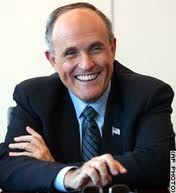
Rudy Giulani’s Six Principles of Leadership
I am only a moderate fan of Rudy Giulani, but I strongly agree with the 6 (eight) principles of leadership he recently shared at a conference in Sydney as reported in BRW, June 23-29, 2011, p. 50.
1. Leaders have strong belief and vision
You can’t expect to have people follow you if you don’t know where you are going yourself. A leader must convey his vision to his people, “Be clear, consistent and have goals,” he says. Engage your people in the vision. People will help you achieve your vision if they have instrumental in brining that vision through.”2. Be optimistic and solve problems
“You have to be an optimist. People follow people who have hope and who help solve problems. The only people who succeed in life overcome problems in and find solutions.”3. Be courageous
“If you are not afraid, then you’re not alive, because things go wrong. It’s the unpredictable thing that happen, which you will need to be prepared for,” he says.4. Preparation
Prepare as much as you can so when things go wrong, you’re able to put into practice the techniques you’ve learned. “No matter how much you practice or prepare, something will always go wrong. But by having practices in place, you’re better prepared.”5. Teamwork
Ask your what are your strengths and weaknesses? Find people who have the skills to balance out your weaknesses.6. Communication and Leadership
Everything you say means nothing if people don’t understand you. Leaders establish loyalty, he says, because they are teachers and they motivate people. “Take good care of people who work for you.”
Categories: Management | Psychology |
Posted on Jun 26, 11

Burt Teplitzky on Using Humor in Sales Pitches
THE WALL STREET JOURNAL: How do you go about incorporating humor into sales presentations?
I use humor to reinforce a point in selling a product or service. My formula is punch them with the joke, stick them with the point and leave them with the benefit. When you take a joke and incorporate it into a conversation or a presentation, it carries a lot more power. It carries the power to change people’s minds, reinforce what they think or feel, and to sell something. That chosen joke is no longer just a joke. It becomes a gem, a humor gem.
Speaking in front of an audience for fun and profit only requires one laugh every three to six minutes. This should be your goal. In a comedy club, you need to have at least three laughs per minute to get regular stage time.
Remember, your audience wants humor and they fear that if they don’t laugh, you will stop using it. They don’t want to have to suffer through a dry presentation.
Read full interview in the WSJ.
PM: The general point being made here is that you need to figure out how to establish a relationship with the person you want to sell to. In the end, you need to provide them with reason to go with you rather than competitor. Everything else being equal, the reason might be that they like you more because it fun to be around you.
Categories: Management | Psychology |
Posted on May 22, 11

Andy Penn’s Tips for Doing Business in Asia
1. Be patient.
2. Focus on building relationships.
3. Get the right people and invest in them.
4. Have a high level of cultural sensitivity and awareness.
5. Diversify across Asian markets as the risks are higher.
6. Build a regional model with a distinct platform that can handle all different tax and regulatory environments.
Common Mistakes when Doing Business in Asia
1. Barriers to entry are very high, so don’t overestimate how long it will take to reach objectives.
2. Don’t underestimate the importance of relationships. Early discussions probably won’t focus on business but on areas such as family and interests.
3. Don’t underestimate cultural differences and how they can lead to a situation of being exploited or causing exploitation.
4. The rest of the world is not blind to the opportunities Asia represents. Competition is fierce and there is a higher risk of failure. Don’t go unprepared.
From BRW, April 14- 20, 2011, pp. 30-31 Biographical Information on Andy Penn
Categories: Management | Psychology |
Posted on Apr 16, 11

What is your number one tip for managing people?
Honest and open dialogue, synergise personal and company goals, position these around a framework to measure success, then let them get on with it.
What is your number one tip for managing business?
Recognise your strengths and weakness then surround yourself with key people whose skill sets will compensate for those weaknesses. Trust your judgement, be prepared to take the advice and watch the cash flow.
What is the best piece of advice you’ve ever received?
Find the right work-life balance and keep your sense of humor.
From BRW, April 14- 20, 2011, p. 12.
Categories: Management |
Posted on Apr 16, 11

Review of DuPont?s Dyes Business: Three Decades of Innovation, 1950-1980
Joseph Innarone and John Tackray are two former members of the DuPont dye business that experienced its golden age after World War II and was sold off in 1979, marking the visible onset of the decline of the U.S. synthetic dye industry. The authors are not research chemists. For the entire period covered by the book, they both held different jobs in the dye business, spanning technical service, sales, and business management. In course of their various assignments that started for both of them as trainees in the Technical Laboratory, the authors acquired substantial knowledge of dye innovations and the business of selling dyes. Rather than attempting a scholarly history (only five sources are cited), the authors offer their own personal history of Du Pont’s dye business. Their story is valuable for anyone who wants to gain a deeper understanding how DuPont became an innovator in the synthetic dye industry yet in the 1970s could no longer compete successfully with foreign rivals. Du Pont exited the industry in 1979 as later did all other U.S. headquartered firms. Download full Review in AMBIX, Vol. 57 No. 3, November, 2010.
Categories: Bookshelf | Management |
Posted on Nov 25, 10

What is your number one tip for managing people?
People do things for their reasons, not yours. Listen. Connect. Inspire (stretch).
What is the best piece of advice you’ve ever received?
It’s hard to decide between my first boss’s advice, “You are less than half as smart as you think you are”, which set me on the right track and my father’s advice, “There is a big difference between what you think you are good at and what you are good at, which has always reminded me to understand my strengths and play to them.
From BRW, September 16- 22, 2010, p. 10.
Categories: Management |
Posted on Sep 18, 10

New Management Focus: Invest in Relationships!
Designing an organization requires making a million decisions both large (e.g. picking a strategy) and small (e.g. picking out paper for the PC printer). It is easy to get lost in the trivial instead of focusing on getting the critical elements right. In my courses, I try to present ideas and frameworks that help identify what is important. At the recent Academy of Management Conference in Montreal I came across a phrase that was new to me. In my view, it crystallizes what managers need to do to design an organization that is able to respond to all the unexpected events that invariably occur in the life of an organization:
Invest in relationships!
Categories: Management | Psychology |
Posted on Aug 21, 10

You Don’t Have to Pay Employees More Than the Competition to Keep Them Happy
Returning to Chicago for the first time in three years, I went to two of my favorite restaurants. In one, Lulu’s, most of the waitresses and busboys I had seen three years ago were still there. In the other, I recognized no one except for the owner. So I asked the owner of Lulu’s if he was paying his people more. He said: “No.” I asked him a second time. He still said: “No.” Confirming the lesson that many management professors emphasize in the context of the Southwest airline example, you don’t have to pay people more than the competition to keep them happy. Lulu’s is a fun place and the interior design is attractive, providing employees non-monetary rewards. Evidently the owner is also not getting on the nerves of his staff. Jokingly he says in front of one of his female employees: “I cannot even get rid of the people I would like to see go.” The lady—who must have been working there for at least 8 years—interjects: “I knew you were going to say this.” The general lesson (except perhaps for Wall Street before the crash) is: You don’t need to pay people more than the competition. But the total rewards of working for you have to be more than the total rewards of working for someone else. Otherwise people will leave.
Categories: Management | Psychology |
Posted on Aug 16, 10

What is your number one tip for managing people?
Be empathetic: When you understand the issues that constrain staff from doing their job you will usually identify bigger issues in the organization.
Is there a lesson you have never forogotten?
Progress is not perfection.
From BRW, April 29-June 2, 2010, p. 12.
Categories: Management |
Posted on May 03, 10

What has been your greatest regret in Business?
That I didn’t really get to know and accept my strengths and weaknesses earlier.
What is your number one tip for managing people?
Fairness and balance, which must not be confused with compromise.
From BRW, April 15-21, 2010, p. 10.
Categories: Management | Psychology |
Posted on Apr 16, 10

Warren Buffet’s Symbolic Leadership
Watch this great advertisement staffed by employees of Geico. Warren Buffet, whose companey fully owns Geico, participates in the ad to demonstrate that he is one the many co-workers. It is funny to see the 80-year-old billionaire impersonate Axl Rose.
Categories: Management |
Posted on Mar 19, 10

Problems with the Peer Review System in Science
Frank Furedi has written a very thoughtful essay on the problems with current peer review system in science. In my view, the issues are a lot more serious in the social sciences where is much harder to formulate non-trivial general laws and make precise predictions that can be proven or disproven. The natural sciences require replication before something is accepted. There is very little exact replication in management research for example. Theories are accepted on very tenous grounds and when you write a paper that contradicts existing paradigms your data is not going to persuade your peers who have a vested interested in the status quo. Read Furedi’s Essay.
Update 28. June 2010:Interesting Problem Case in Economics: Copy URL into your browser: http://www.handelsblatt.com/politik/nachrichten/no-comment-please;1446947
Categories: Management |
Posted on Mar 06, 10
The New AGSM MBA (Executive) Strategic Management Year
As the director of the Strategic Management Year, I led of team of faculty to redesign the year-long program. We added many new features (live case studies, book reviews, learning diaries, self-refelection papers, peer coaching, peer evaluations, rewriting of strategy paper) and organized the year around the fundamental problems that a general manager and entrepreneur faces:
1. How do I detect and select business opportunities?
2. How do I develop business opportunities?
3. How do I grow a business?
4. How do I transform a business?
In this short video, I describe the changes that we have made. Click on “More” to see a more detailed picture overview of all program.
Categories: Management |
Posted on Feb 27, 10

Apple did not forsee the success of the application store
It is hard to forsee the future as the recent episode with Apple’s application store demonstrates. The NY Times reports:
The App Store’s success — as much a surprise to Apple as it has been to competitors — has given rise to a new digital ecosystem. Today, hundreds of software aspirants, from individuals tinkering in their bedrooms late at night to established companies looking for lucrative new revenue streams, are jumping into the App Store fray.
When making a decision, managers often make the mistakes of only considering the potential upsides, but not the cost of downsides. Positive surprises don’t kill firms. It is the negative surprises that bring you down.
Categories: Management | Psychology |
Posted on Dec 06, 09

The Economist on Annoying Bussiness Guru and the Problems with MBA Curricula
The Economist has a wonderful new column called Schumpeter. The October 22 issue revists the shortcomings of management gurus that I highlight in my classes. The Sepember 24 column encourages business schools to teach people to be more sceptical.
The three habits…of highly irritating management gurus
Business schools have done too little to reform themselves in the light of the credit crunch
Categories: Management |
Posted on Oct 25, 09

